NEWBORN FEEDING
Breast Milk Consumption Newborns typically consume breast milk every two to three hours, averaging 1 to 2 ounces per feeding (American Academy of Pediatrics, 2024). As your infant reaches two weeks of age, this quantity will gradually increase. If you are utilizing a breast pump and bottle-feeding, you can easily monitor the volume of milk your baby consumes at each feeding. However, when nursing directly from the breast, accurately measuring your infant's intake may prove challenging, which is perfectly acceptable. A reliable method to assess your baby's consumption is by observing their output. It is indicative that your infant is adequately nourished if they wet their diaper two to three times daily during the initial days, increasing to five to six times daily after they reach four or five days of age.
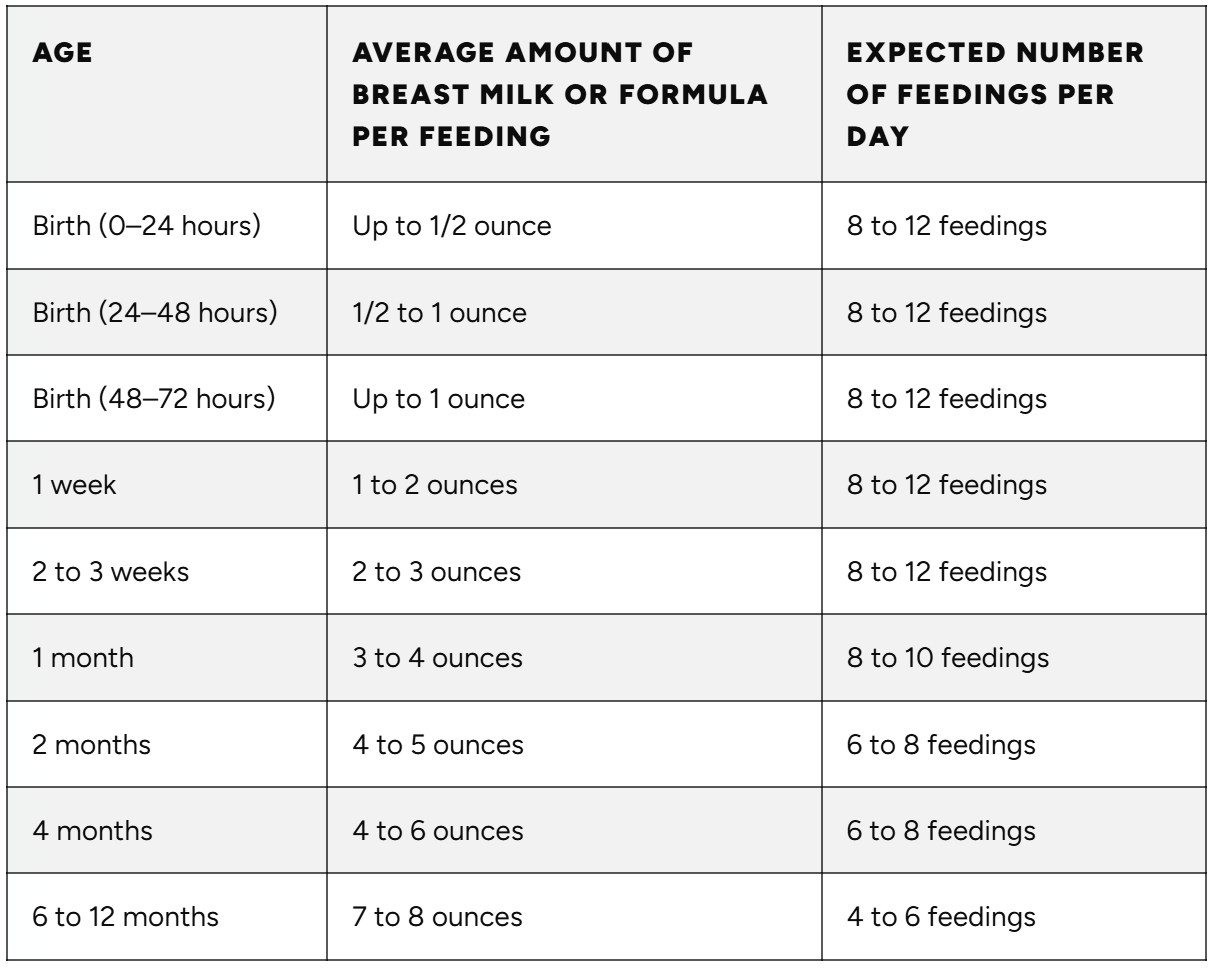
🍼 Baby Feeding Guide by Age
Because every little tummy grows differently — and Tenderly is here to help you every step of the way.
👶 1–3 Months: Feeding Basics
During the first few months, your baby’s appetite grows quickly! Between 1 and 3 months, most little ones become more expressive about when they’re hungry or full.
On average, a 2-month-old may drink 4 to 5 ounces every 3–4 hours, according to the AAP. Whether you’re breastfeeding or using formula, follow your baby’s cues — they’ll let you know when it’s time to eat or when they’ve had enough.
If you’re formula-feeding, you may want to choose a blend that includes 2’-FL HMO, a prebiotic compound also found in breast milk that supports healthy digestion and immune development.
🥣 4–6 Months: Getting Ready for Solids
Most babies are ready to start exploring solids around 6 months of age, though some show signs a little earlier. Look for these readiness cues:
Good head and neck control
Sitting up with little or no support
Loss of the tongue-thrust reflex (so food stays in the mouth)
Showing interest in grabbing or reaching for food
Start slowly — about 1–2 tablespoons twice a day — and remember that breast milk or formula remains the main source of nutrition during the first year. Around 4 months, babies usually take 4–6 ounces per feeding, increasing to 8 ounces every 4–5 hours by 6 months.
💗 Reading Hunger Cues
Even though babies can’t talk, they’re excellent communicators! Signs your baby may be hungry include:
Alertness or restlessness
Lip-smacking or opening their mouth
Putting hands to their mouth
Rooting (turning head side-to-side looking for the nipple)
Fussiness
Crying is a late hunger cue, so try to feed before your little one reaches that stage.
🧡 6–9 Months: Exploring New Flavors
At this stage, breast milk or formula still provides most of your baby’s calories — up to 32 ounces per day. Growth spurts and teething can affect appetite, so continue following hunger cues rather than strict schedules.
Offer solids when you eat together so baby can join the family routine. Early feeding is about discovery and experience, not just nutrition.
Try introducing:
Iron-fortified baby cereal
Puréed fruits, vegetables, and meats
Soft finger foods (like steamed veggies or banana)
Yogurt, cottage cheese, or simple casseroles
💡 Tip: Introduce one new food at a time and wait 3–5 days before adding another to help spot any allergies or sensitivities.
🍎 9–12 Months: Little Foodies in Action
By now, babies typically enjoy 7–8 ounces per feeding and up to 32 ounces of formula or breast milk in 24 hours. About half of their calories now come from solid food.
Your baby’s curiosity about food will blossom — let them explore textures and tastes safely! Offer bite-sized pieces, dips like yogurt or oatmeal, and encourage self-feeding. Always avoid hard, round, or small foods that could pose a choking risk.
🥛 After 12 Months: Transitioning to Table Food
Once your baby turns 1, most calories should come from family meals. You can begin serving whole milk (about 2–3 cups per day) or other calcium-rich options.
Establishing a routine of set meals and snacks helps your toddler develop healthy habits and excitement for new foods. Every child is different, so consult your pediatrician for personalized guidance as your little one grows.
🌷 The Tenderly Promise
At Tenderly, we’re here to make feeding time less stressful and more joyful — one spoonful at a time.
💗 How we care for you!